
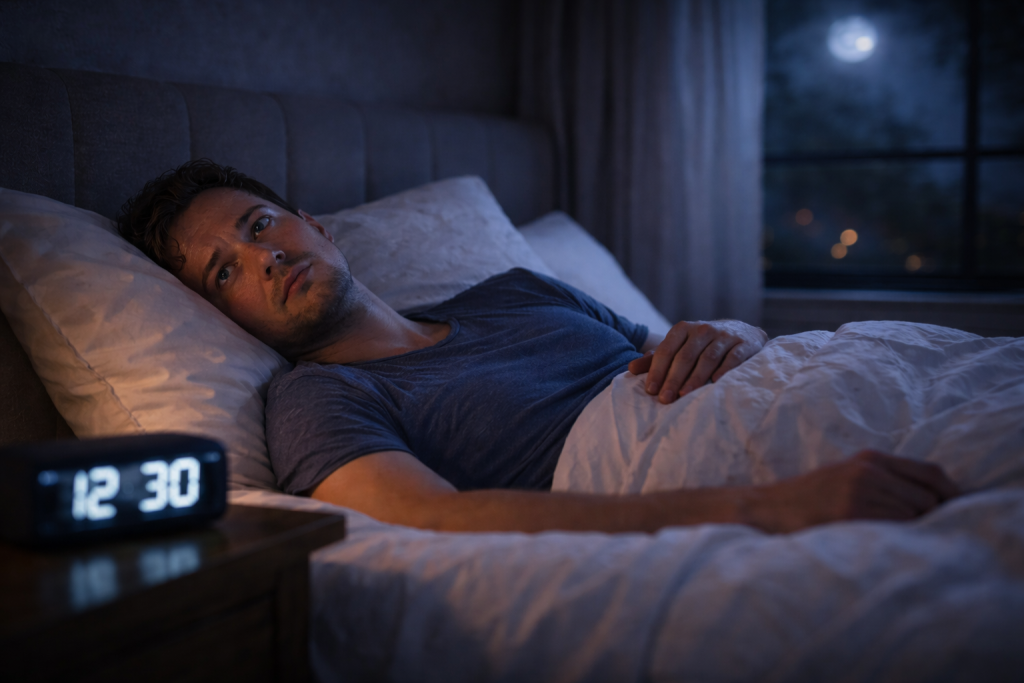
Waking up in the middle of the night feeling hot, sweaty, or uncomfortable can be frustrating and disruptive to your sleep.
Occasional night sweating can happen for many normal reasons, but if it happens frequently, it may be a sign that something in your sleep environment or daily routine needs adjustment.
Understanding the possible causes can help you identify what might be affecting your sleep.
Note: even if you spend enough time in bed, overheating can disrupt sleep cycles and prevent deep rest. If you regularly wake up feeling drained despite a full night of sleep, you might also relate to why some people wake up tired even after 8 hours of sleep.
1. Your Bedroom Is Too Warm
One of the most common reasons people wake up sweating is simply that the bedroom temperature is too high.
Sleep experts generally recommend keeping the room between 60–67°F (15–19°C) for optimal sleep. According to guidance from the Sleep Foundation, cooler bedroom temperatures can help the body maintain deeper sleep cycles.
If your room is warmer than this, your body may struggle to regulate temperature during sleep.
2. Heavy Blankets or Bedding
Thick blankets, memory foam mattresses, or heavy comforters can trap body heat.
If you tend to sleep hot, switching to lighter bedding or breathable materials can make a noticeable difference.
3. Stress and Anxiety
Stress can activate your body’s fight-or-flight response, which may increase heart rate and body temperature during sleep or lead to racing thoughts that disrupt sleep.
This can sometimes lead to waking up sweaty, especially during vivid dreams or nighttime awakenings.
4. Alcohol Before Bed
Alcohol can disrupt sleep cycles and affect your body’s ability to regulate temperature.
Many people notice increased sweating after drinking alcohol in the evening.
5. Hormonal Changes
Hormones play a major role in regulating body temperature.
Night sweats are often associated with hormonal changes such as:
- menopause
- pregnancy
- thyroid issues
If sweating happens frequently or severely, a healthcare professional may be able to help identify the cause.
6. Illness or Infection
Fever and infections can also cause nighttime sweating.
If night sweats are accompanied by other symptoms like fever, fatigue, or weight loss, it may be worth discussing with a medical professional.
7. Certain Medications
Some medications can cause increased sweating as a side effect.
These can include certain antidepressants, fever-reducing medications, and hormone treatments.
8. Poor Sleep Environment
Your sleep environment plays a big role in comfort throughout the night.
Factors like:
- poor airflow
- thick pajamas
- synthetic bedding materials
can all contribute to overheating.
Using fans or adjusting your bedding can sometimes help regulate temperature more effectively.
9. Stress Dreams or Nightmares
Nightmares or vivid dreams can activate your body’s stress response.
This may temporarily increase heart rate and body temperature, which can cause sweating.
10. Sleep Disorders
Certain sleep disorders may also contribute to night sweats.
Conditions like sleep apnea can cause frequent awakenings and changes in breathing patterns that may lead to sweating during the night.
Improving Your Sleep Environment
If night sweating happens frequently, making small adjustments to your sleep setup may help.
Some strategies include:
- lowering bedroom temperature to a cooler range
- using lighter blankets
- improving airflow with a fan or using tools designed to improve your sleep environment
- maintaining a consistent sleep routine
You may also want to explore ways to improve your overall sleep quality, such as creating a calming bedtime routine.
Final Thoughts
Waking up sweating at night can have many different causes, ranging from simple environmental factors to underlying health conditions.
If overheating wakes you up in the middle of the night, these strategies can help you cool down and fall asleep again. You can also read our guide on falling back asleep after waking up during the night.
In many cases, adjusting your sleep environment and bedtime habits can make a noticeable difference.
If night sweats happen frequently or severely, it may be helpful to discuss the issue with a healthcare professional to rule out any medical causes.