
Many people focus on bedtime routines, sleep gadgets, or mattress comfort when trying to improve sleep.
But one often overlooked factor can have a surprisingly large impact on sleep quality:
Bedroom temperature.
If your room is too warm or too cold, your body may struggle to stay in deeper sleep stages.
Finding the best temperature for sleeping can help you fall asleep faster, stay asleep longer, and wake up feeling more refreshed.
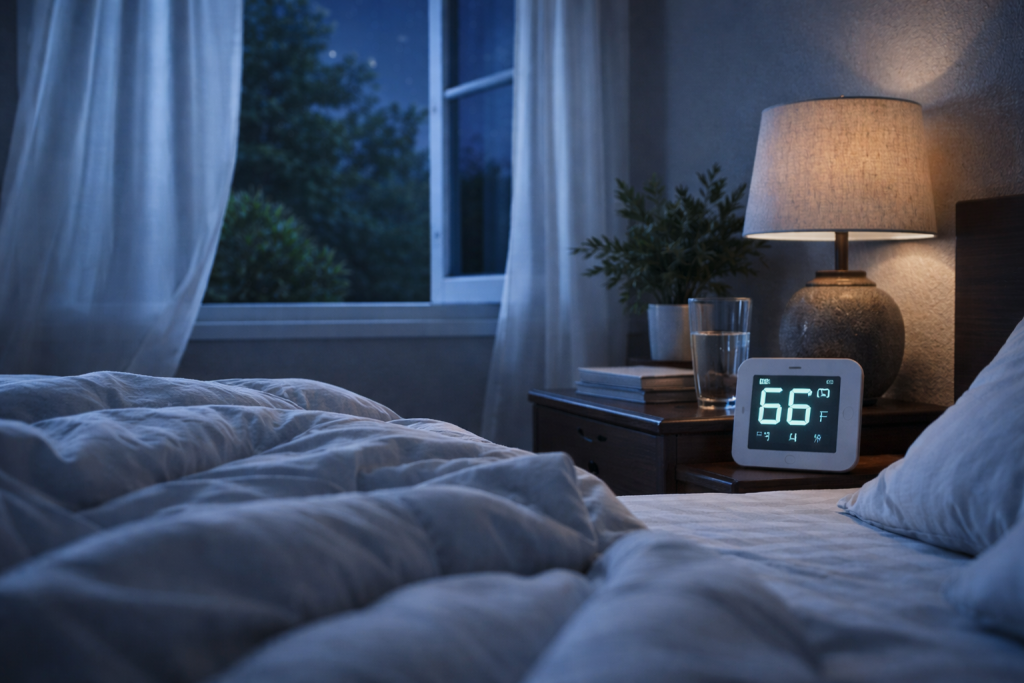
What Is the Best Temperature for Sleeping?
Sleep experts generally recommend keeping your bedroom between 60–67°F (15–19°C) for optimal sleep.
According to sleep research summarized by the Sleep Foundation, cooler bedroom temperatures help support the body’s natural sleep cycle and allow deeper sleep stages to occur more consistently.
This range works well for most people because it helps your body maintain the slight drop in core temperature that naturally occurs during sleep.
Why Temperature Affects Sleep Quality
Your body temperature naturally drops as you prepare for sleep.
This temperature shift signals your brain that it’s time to rest.
If your bedroom is too warm, your body may struggle to cool down properly.
This can lead to:
• difficulty falling asleep
• frequent waking during the night
• lighter sleep cycles
• waking up feeling tired even after a full night of sleep
For example, overheating is one common reason people experience night sweats or wake up sweating during sleep.
Signs Your Bedroom Temperature May Be Affecting Sleep
If your sleep environment isn’t ideal, your body may struggle to stay comfortable throughout the night.
Common signs include:
• waking up sweating
• tossing and turning
• kicking off blankets during the night
• waking up feeling overheated
• difficulty falling back asleep
If these problems sound familiar, adjusting your bedroom temperature may make a noticeable difference.
Tips for Maintaining the Ideal Sleep Temperature
Small changes to your sleep environment can help regulate temperature and improve sleep quality.
Lower Your Thermostat at Night
Setting the thermostat slightly cooler before bedtime can help signal to your body that it’s time to sleep.
Even a few degrees can make a difference.
Use Breathable Bedding
Heavy blankets and synthetic fabrics can trap body heat.
Switching to breathable bedding materials like cotton or bamboo may help regulate temperature more effectively.
Improve Airflow in the Bedroom
Air circulation can significantly affect sleep comfort.
Some people improve airflow by:
• opening a window
• running a quiet fan
• adjusting bedroom ventilation
Background sound from a fan can also help mask disruptive noises while you sleep.
Consider Sleep Environment Tools
Some sleep tools are specifically designed to improve comfort during the night.
For example, cooling pillows, sunrise alarm clocks, or white noise machines can help create a more comfortable sleep environment and prevent overheating.
You can explore several helpful options in our guide to sleep gadgets that actually improve sleep quality.
Temperature and Nighttime Wakeups
If you frequently wake up in the middle of the night, temperature could be one of the causes.
Overheating can pull your body out of deeper sleep cycles and make it harder to stay asleep.
Some people notice they wake up at consistent times during the night, such as 3AM or 4AM, when temperature discomfort disrupts their sleep.
Improving bedroom temperature may help reduce these nighttime wakeups.
Finding Your Personal Comfort Zone
While 60–67°F works well for most people, the ideal temperature can vary slightly depending on:
• bedding materials
• humidity levels
• personal comfort preferences
• seasonal changes
The key is finding a cool, comfortable environment that allows your body to relax and maintain stable sleep cycles.
Final Thoughts
Bedroom temperature plays a much larger role in sleep quality than many people realize.
A cooler environment helps your body regulate its natural sleep rhythms and stay in deeper sleep stages throughout the night.
If you’ve been struggling with poor sleep, frequent wakeups, or overheating, adjusting your bedroom temperature may be one of the easiest improvements you can make.
Even small changes to your sleep environment can lead to noticeably better rest.
If you’re trying to improve your sleep overall, you may also want to explore our guide to science-backed tips for sleeping better.
Related Sleep Articles
- Why Do I Wake Up Sweating at Night?
- Why Do I Wake Up Tired Even After 8 Hours of Sleep?
- Why Do I Wake Up at 3AM Every Night?
- How to Sleep Better: 30 Science-Backed Tips
- 7 Sleep Gadgets That Actually Improve Sleep Quality
Frequently Asked Questions
What is the best temperature for sleeping?
Most sleep experts recommend keeping your bedroom between 60–67°F (15–19°C). This range helps your body maintain its natural nighttime temperature drop and supports deeper sleep.
Is it better to sleep in a cold or warm room?
Most people sleep better in a slightly cool room. Cooler environments help regulate body temperature and prevent overheating that can disrupt sleep cycles.
Can a room that is too warm affect sleep quality?
Yes. If your bedroom is too warm, your body may struggle to cool down properly, which can lead to frequent waking and lighter sleep.
Does temperature affect REM sleep?
Yes. Temperature discomfort can interrupt sleep cycles, including REM sleep, which is important for mental recovery and memory processing.