
Waking up during the night is extremely common.
Most people briefly wake up several times during sleep cycles but fall back asleep quickly without remembering it.
If you often wake up at the same time each night — such as 3AM or 4AM — it may be related to normal sleep cycles or environmental factors.
However, if you wake up fully and your mind becomes active, falling back asleep can suddenly feel difficult.
The good news is that a few simple strategies can make it much easier to return to sleep.
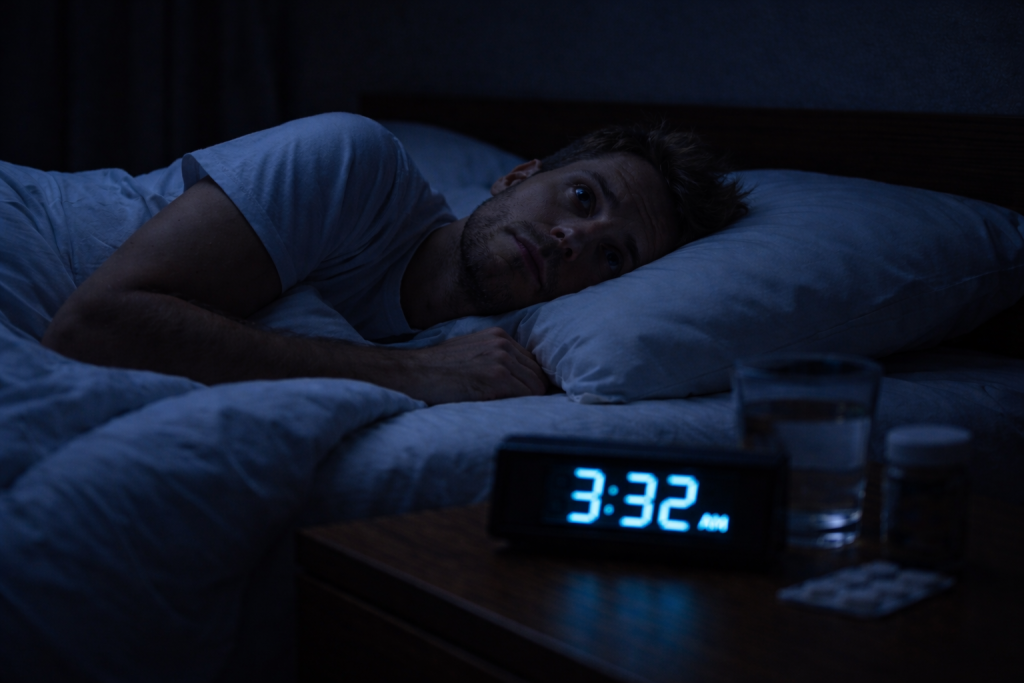
Stay Calm and Avoid Checking the Clock
Many people wake up at the same time each night, often around 3AM or 4AM.
One of the worst things you can do after waking up at night is immediately checking the time.
Seeing the clock can trigger stress like:
- “I only have 3 hours left to sleep.”
- “I have to wake up soon.”
This stress can activate the brain and make falling back asleep harder.
If possible, keep your clock turned away from your bed.
Avoid Looking at Your Phone
Phones emit blue light, which can signal to your brain that it’s time to wake up.
Checking social media, messages, or news can also stimulate your brain when it should be winding down.
If you wake up during the night, try to keep screens completely out of reach.
Try Slow Breathing
Slow breathing techniques can help relax the nervous system.
A simple method is:
inhale slowly for 4 seconds
hold for 4 seconds
exhale slowly for 6 seconds
Repeating this pattern for a few minutes often helps the body return to a relaxed state.
Breathing exercises can also help quiet an overactive mind. If your thoughts start racing during the night, you may also be dealing with racing thoughts that make it difficult to fall asleep again.
Use Background Sound to Reduce Disruptions
Silence can sometimes make small noises more noticeable.
Consistent background sound can help mask sudden disruptions.
Many people use:
- white noise machines
- fans
- sleep sound apps
These create a stable sound environment that helps the brain stay relaxed during sleep.
If noise regularly wakes you during the night, some people also use earplugs designed specifically for sleeping.
👉 Related: Do White Noise Machines Actually Help You Sleep Better?
Get Out of Bed If You’re Awake Too Long
Sleep experts often recommend getting out of bed if you remain awake for more than about 20 minutes. According to guidance from the Sleep Foundation, leaving the bed briefly and doing a calm activity can help reset your brain’s association with sleep.
Doing something calm in dim lighting — like reading a book — can help reset your brain.
Once you begin to feel sleepy again, return to bed.
Make Sure Your Sleep Environment Is Comfortable
If your bedroom environment isn’t ideal, falling back asleep can be more difficult.
Consider whether your room might be:
- too warm or poorly ventilated
- too bright
- too noisy
Small improvements to your sleep environment can make a big difference over time.
👉 Related: 7 Sleep Gadgets That Actually Improve Sleep Quality
Final Thoughts
Waking up at night happens to almost everyone at some point.
The key is keeping your body and mind relaxed so your natural sleep cycle can continue.
Avoid stimulating activities, keep the environment calm, and give your body time to drift back into sleep.
With a few adjustments, many people find that falling back asleep becomes much easier.