
Many people sleep with a fan running at night. For some, it helps keep the room cool. For others, the steady sound creates a calming background noise that makes it easier to fall asleep.
But is sleeping with a fan actually good for your sleep?
The answer depends on how it affects your sleep environment.
Fans can provide several benefits for sleep, but there are also a few potential downsides to consider.
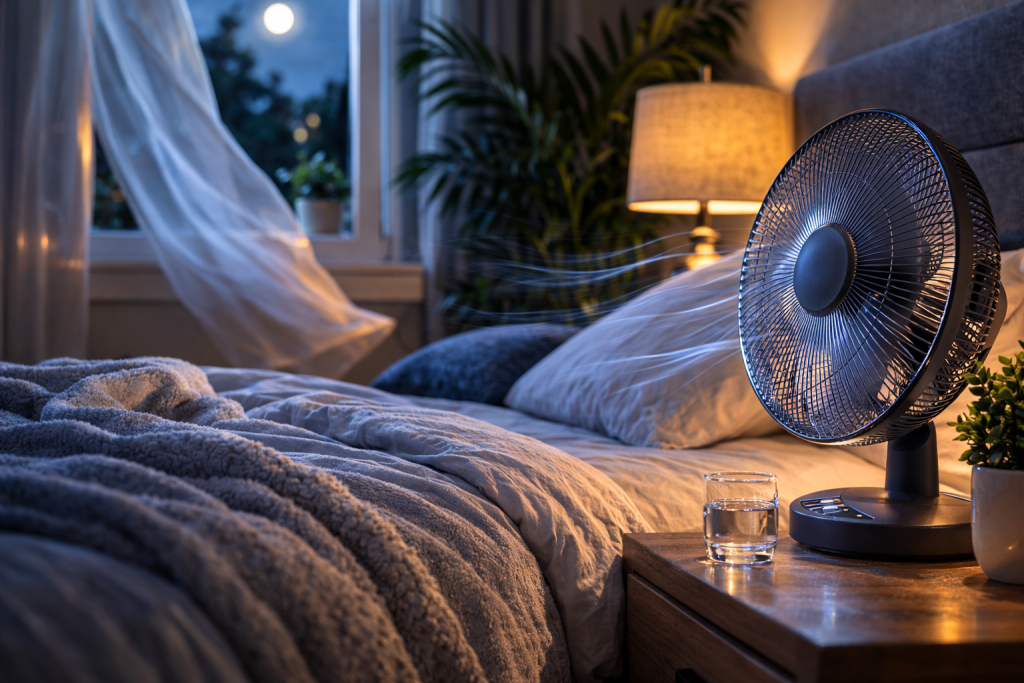
Benefits of Sleeping With a Fan On
Better Air Circulation
One of the biggest benefits of using a fan is improved airflow.
Moving air helps regulate room temperature and prevents heat from building up around the bed. This can be especially helpful if your bedroom tends to feel warm at night.
Maintaining a cooler environment is important because bedroom temperature plays a major role in sleep quality. Research summarized by the Sleep Foundation shows that sleep environment factors like temperature and airflow can influence how easily we fall asleep.
Cooling the Bedroom
Fans can help lower the perceived temperature of a room by circulating air across your skin.
This can be especially helpful for people who struggle with overheating or night sweats during sleep.
For many people, a cooler room makes it easier to fall asleep and stay comfortable throughout the night. Maintaining the ideal bedroom temperature for sleeping can significantly improve sleep quality.
White Noise Effect
Another reason people like sleeping with a fan is the sound it produces.
The steady hum of a fan can function similarly to white noise, masking sudden environmental sounds like traffic, neighbors, or a snoring partner.
This consistent background noise can help prevent sleep disruptions.
Affordable Sleep Solution
Compared to other sleep devices, fans are inexpensive and widely available.
For people looking to improve sleep without purchasing specialized equipment, fans are just one example of tools that can improve your sleep environment. You can explore several other sleep gadgets that actually improve sleep quality.
Possible Downsides of Sleeping With a Fan
Dry Air and Irritation
Running a fan all night can sometimes cause dry eyes, dry skin, or nasal irritation, particularly in already dry environments.
If you experience these symptoms, adjusting the fan direction or using a humidifier may help.
Circulating Dust and Allergens
Fans can circulate dust, pollen, or pet dander throughout the room.
People with allergies may notice increased symptoms if the fan spreads allergens during the night.
Keeping your bedroom clean and replacing air filters regularly can help reduce this issue.
Temperature May Become Too Cool
While many people benefit from cooler air, a fan that runs too strongly may make the room colder than necessary.
Finding the right balance between airflow and temperature comfort is important.
When Sleeping With a Fan Helps Most
Sleeping with a fan can be particularly helpful if you:
• live in a warm climate
• struggle with overheating at night
• are sensitive to noise disruptions
• prefer steady background sound
In these situations, a fan may improve your sleep environment and reduce nighttime disruptions.
Final Thoughts
For many people, sleeping with a fan on can improve comfort by increasing airflow, lowering perceived temperature, and masking background noise.
However, fans may also cause dryness or circulate allergens if used improperly.
The key is adjusting your sleep environment so it remains cool, comfortable, and quiet.
Small environmental improvements like airflow, temperature control, and consistent background sound can make a noticeable difference in sleep quality.
If you’re trying to improve your sleep environment overall, you may also want to explore our guide to science-backed tips for sleeping better.