
If you can’t fall asleep because of anxiety, you may notice your thoughts racing, your body feeling tense, or your mind unable to settle.
This is a common experience. Anxiety keeps your brain in a more alert state, making it harder to relax—even when you’re tired.
The goal isn’t to force sleep, but to gently guide your mind and body into a calmer, more relaxed state.
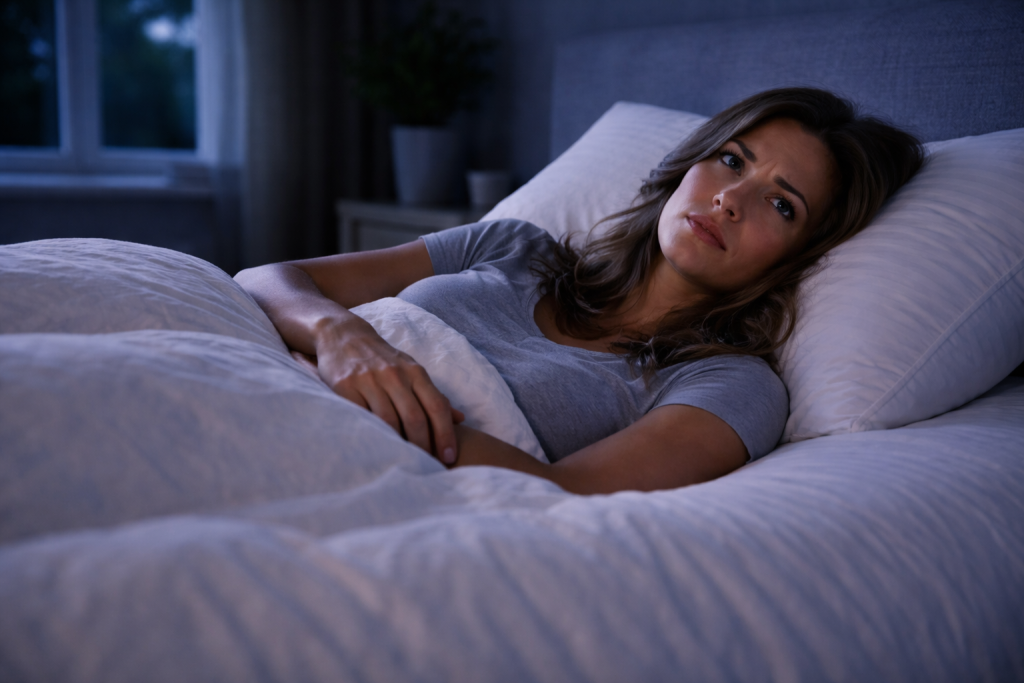
Step 1: Don’t Force Sleep
Trying to force yourself to fall asleep can actually increase anxiety.
Instead, focus on relaxing your body rather than “trying to sleep.”
Step 2: Slow Your Breathing
Your breathing plays a direct role in how your body feels.
Try slow, steady breathing to calm your nervous system.
This can help reduce tension and signal your body that it’s safe to relax.
If you struggle to settle down at night, techniques that help you fall asleep fast can make it easier to transition into sleep.
Step 3: Shift Your Focus
If your mind is racing, gently shift your focus to something neutral.
For example:
- counting your breaths
- focusing on physical sensations
- visualizing a calm place
If your brain won’t shut off at night, redirecting your attention can help reduce mental activity. Understanding why your brain won’t shut off at night can help you address the root cause.
Step 4: Get Out of Bed Briefly (If Needed)
If you’ve been awake for a while, getting out of bed and doing something calming can help reset your mind.
Avoid screens and bright lights during this time.
Step 5: Write Down Your Thoughts
Journaling can help clear your mind.
Writing down worries or ideas can prevent your brain from holding onto them.

Step 6: Create a Calming Environment
Your environment affects how relaxed you feel.
Maintaining the best temperature for sleeping can help your body settle and feel more comfortable. Learning how white noise for sleep works can also create a more calming and consistent environment.
Creating a more comfortable sleep setup, including supportive bedding or a better pillow, can also help your body relax more easily at night.
Step 7: Relax Your Body
Physical tension often accompanies anxiety.
Techniques like progressive muscle relaxation can help release that tension.
Step 8: Stick to a Routine
Consistency helps your body learn when it’s time to sleep.
Learning how to sleep better naturally can support better long-term sleep habits.
Step 9: Be Patient With Yourself
It’s normal to have occasional nights where sleep is difficult.
The goal is not perfection — but progress.
Research from the Sleep Foundation shows that anxiety can increase mental alertness and delay sleep onset, making it harder to fall asleep quickly.
Why Anxiety Feels Stronger at Night
At night, your brain has fewer distractions and more space to process thoughts, emotions, and stress.
This can make anxiety feel more intense, even if nothing has changed.
Combined with physical tension and an increased awareness of your body, this can create a cycle where anxiety makes it harder to sleep—and lack of sleep increases anxiety.
Understanding this pattern can help you respond to it more calmly instead of becoming frustrated.
Final Thoughts
If you can’t fall asleep because of anxiety, small changes can make a meaningful difference.
Focusing on calming your mind, relaxing your body, and improving your environment can help you fall asleep more naturally.
Over time, these habits can reduce anxiety and improve your overall sleep quality.
Related Sleep Guides
- Why Do I Feel Anxious at Night
- How to Calm Your Mind Before Bed
- How to Fall Asleep Fast
- Why Your Brain Won’t Shut Off at Night
- How to Sleep Better Naturally
FAQ
Why does anxiety make it hard to sleep?
Anxiety keeps your brain in an alert state, making it difficult to relax.
What should I do if I can’t fall asleep?
Focus on calming your mind and body instead of forcing sleep.
How can I fall asleep faster with anxiety?
Breathing techniques, journaling, and reducing stimulation can help.