
Many people turn to background sound to improve sleep, especially when dealing with noisy environments or difficulty falling asleep.
Two of the most popular options are white noise and brown noise. While they may sound similar at first, they actually have different sound profiles and may affect sleep differently.
Understanding the difference can help you decide which one might work best for your sleep environment.
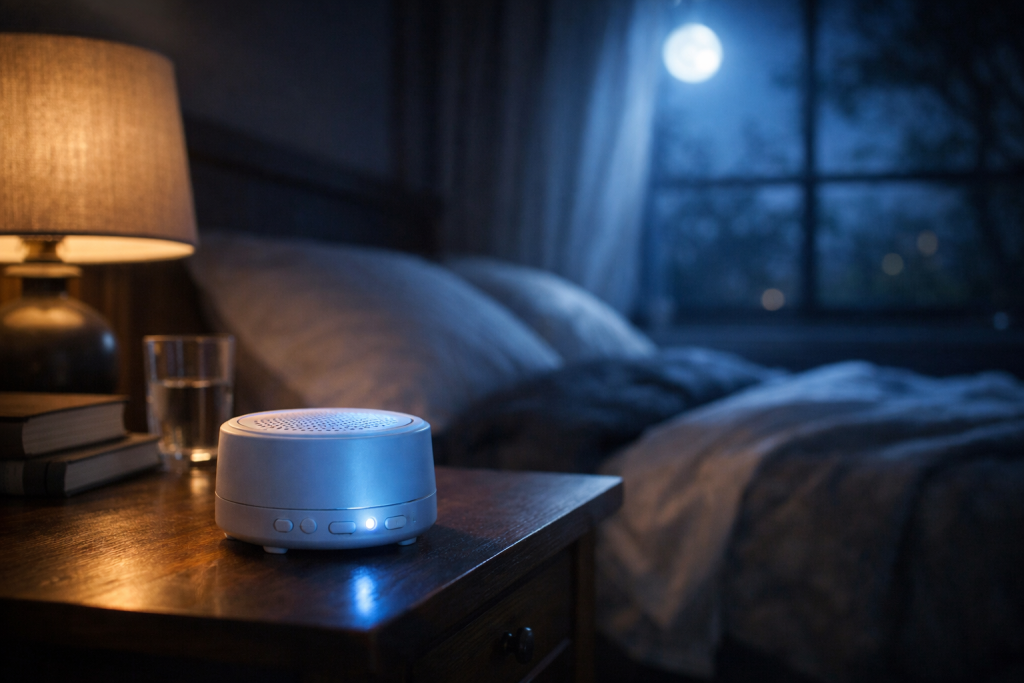
What Is White Noise?
White noise is a sound that contains all audible frequencies at equal intensity. According to research explained by the Sleep Foundation, steady background sound can help mask disruptive noises that interrupt sleep.
This creates a steady, consistent sound that many people describe as similar to:
- static from a television
- a running fan
- gentle rainfall
Because white noise spreads evenly across the sound spectrum, it is very effective at masking sudden environmental noises such as traffic, voices, or doors closing.
Many people use white noise machines designed specifically for sleep to help maintain uninterrupted sleep throughout the night.
What Is Brown Noise?
Brown noise (sometimes called Brownian noise) is similar to white noise but emphasizes lower frequencies.
This gives it a deeper, softer sound that many people describe as similar to:
- distant thunder
- heavy rainfall
- strong ocean waves
Because the higher frequencies are reduced, brown noise can sound smoother and less sharp than white noise.
Some people find this deeper sound more relaxing when trying to fall asleep.
White Noise vs Brown Noise
The main difference between these two sounds is frequency distribution.
White noise spreads sound evenly across all frequencies.
Brown noise reduces higher frequencies and emphasizes deeper tones.
In practical terms:
| Feature | White Noise | Brown Noise |
|---|---|---|
| Sound profile | Balanced across frequencies | Deeper and lower pitched |
| Typical comparison | Fan or static | Thunder or ocean waves |
| Best for | Masking environmental noise | Relaxation and deeper sound preference |
Both types of noise can be helpful depending on personal preference and the type of noise you’re trying to block.
Which One Is Better for Sleep?
There is no single answer because sleep preferences vary from person to person.
White noise tends to work well for people who need to mask sudden sounds, such as traffic or noisy neighbors.
Brown noise may feel more soothing for people who prefer lower, deeper tones.
Many sleep devices allow you to experiment with both types of sound to see which works best.
Other Sounds That May Help with Sleep
In addition to white and brown noise, some people prefer other relaxing sounds such as:
- rainfall
- ocean waves
- wind or forest sounds
These types of ambient sounds are often available on white noise machines or sleep sound apps and can create a consistent background environment that helps promote relaxation.
Creating the Ideal Sleep Environment
Background sound is only one piece of good sleep hygiene.
Many people also combine sound masking with other strategies such as:
- earplugs to reduce sudden noise
- sleep masks to block light
- maintaining a consistent bedtime routine
If you’re looking to improve your sleep overall, you may also want to read our complete guide on science-backed tips for sleeping better.
Final Thoughts
Both white noise and brown noise can help improve sleep by creating a consistent sound environment that masks disruptive noise.
The best option often comes down to personal preference.
If you are sensitive to sudden sounds or live in a noisy environment, experimenting with different sound types may help you find a more restful sleep routine.