
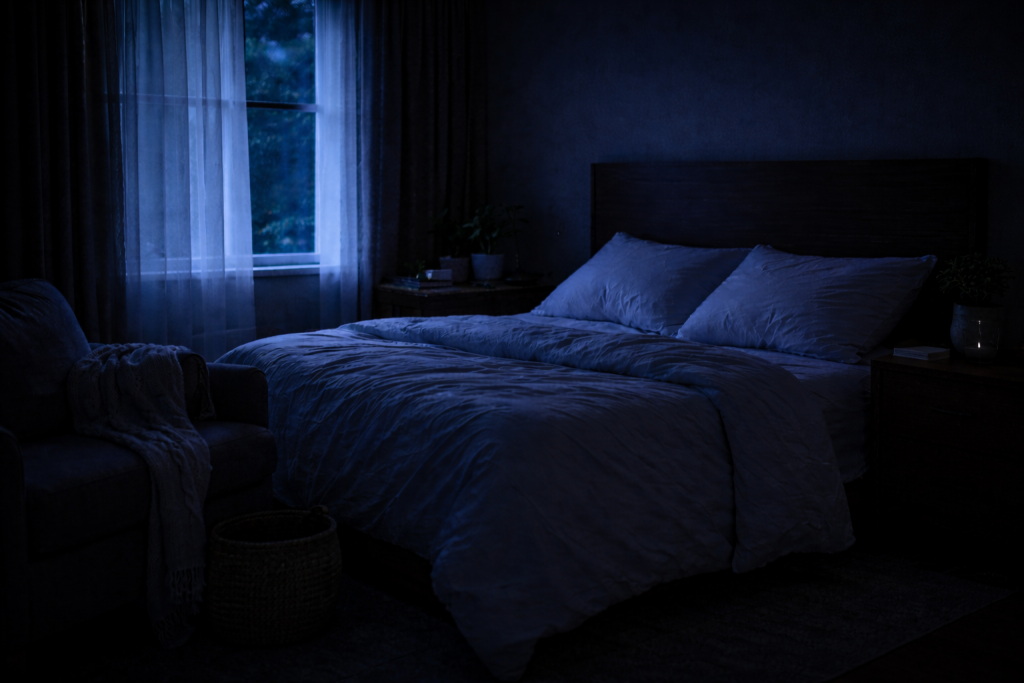
If you’ve ever woken up because of light in your room, you’re not alone.
Even small amounts of light—like:
- a streetlight through the window
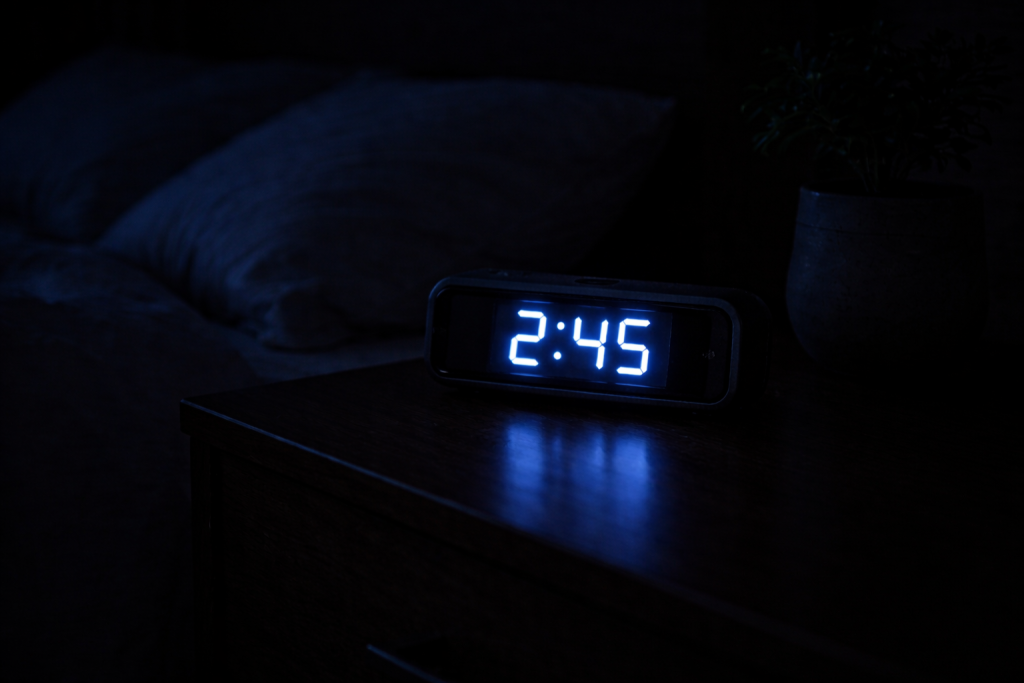
- a glowing alarm clock
- your phone lighting up
- early morning sunlight
can be enough to wake you up.
And once you’re awake, it can be hard to fall back asleep.
This happens because light directly affects how your body regulates sleep.
Let’s break down why.
1. Light Signals Your Brain to Wake Up
Your body uses light as a natural signal to control sleep and wakefulness.
When your eyes detect light, your brain starts shifting toward wake mode.
This can:
- reduce sleepiness
- increase alertness
- interrupt your sleep cycle
Even small amounts of light can trigger this response.
2. Melatonin Production Gets Suppressed
Melatonin is the hormone that helps you stay asleep.
Light exposure can:
- reduce melatonin levels
- make it harder to stay asleep
- cause earlier awakenings
This is one reason people wake up more easily when exposed to light at night.
3. Your Sleep Is Already in a Lighter Stage
If you’re in a lighter stage of sleep, it doesn’t take much to wake you up.
Light becomes more noticeable, which can:
- trigger a wake-up
- make you more aware of your surroundings
This overlaps with why do I wake up in the middle of the night and why do I wake up suddenly at night for no reason.
4. Early Morning Light Triggers Your Internal Clock
Your body has an internal clock (circadian rhythm) that responds to light.
Early morning light can:
- signal that it’s time to wake up
- shift your sleep timing
- cause earlier awakenings
This is closely related to why do I wake up too early and can’t fall back asleep, where timing plays a major role.
5. Artificial Light Sources Disrupt Sleep
Even small artificial lights can have an impact.
Common sources include:
- LED lights
- screens
- electronics
- hallway lighting
These may seem minor—but your brain still detects them.
6. Your Environment Isn’t Dark Enough
If your room isn’t fully dark, your sleep may be more fragile.
This can lead to:
- easier awakenings
- lighter sleep overall
- more disruptions
Creating a darker environment can significantly improve sleep quality.
7. Your Brain Is Sensitive to Stimulation
If your nervous system is already active, light can push you fully awake.
This connects to why do I wake up feeling on edge at night and why do I wake up wide awake in the middle of the night, where your brain becomes alert quickly.
Improving your overall sleep habits can make a big difference over time, especially if you focus on how to sleep better and build a consistent routine.
According to Sleep Foundation, exposure to light during sleep can interfere with melatonin production and disrupt the body’s natural sleep-wake cycle.
How to Prevent Light From Waking You Up
If light is disrupting your sleep, focus on reducing exposure as much as possible.
Try:
- using blackout curtains
- wearing a sleep mask
- removing or covering light sources
- turning off electronics
- using dim, warm lighting before bed
These changes can help your body stay in sleep mode longer.
Final Thoughts
Light is one of the most powerful signals your body responds to—and even small amounts can wake you up.
If you’re waking up due to light, the solution is often simple:
👉 create a darker sleep environment
With a few adjustments, you can reduce disruptions and sleep more consistently through the night.
Related Articles
- Why Do I Wake Up Too Early and Can’t Fall Back Asleep? 8 Common Causes
- Why Do I Wake Up in the Middle of the Night? 10 Possible Causes
- Best Sleep Masks for Blocking Light (2026 Guide)
- Why Do I Wake Up Wide Awake in the Middle of the Night? 9 Possible Causes
- Why Do I Wake Up Suddenly at Night for No Reason? 9 Possible Causes
FAQ
Can a small amount of light really wake you up?
Yes, even low levels of light can signal your brain to wake up and reduce melatonin production.
Is it better to sleep in complete darkness?
For most people, yes. A dark environment supports deeper and more consistent sleep.
Why do I wake up at sunrise even if I’m still tired?
Your body responds to natural light as a wake-up signal, even if you haven’t had enough sleep.