
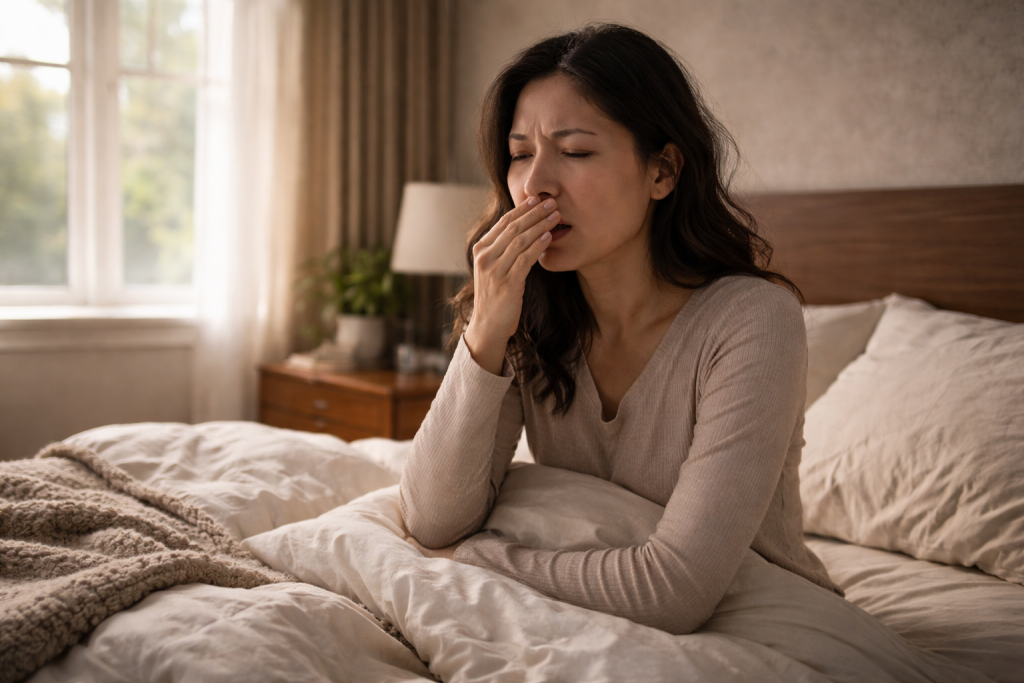
Have you ever woken up and felt like the air in your room just… isn’t right?
It might feel:
- stuffy or heavy
- slightly hard to breathe
- dry or uncomfortable
- like you need fresh air immediately
Even if your room looks fine, the feeling can be very noticeable.
This usually comes down to air quality, airflow, and how your body responds to your sleep environment.
Let’s break down what might be causing it.
1. Poor Air Circulation
If air isn’t moving through your room, it can start to feel stagnant.
This can cause:
- a stuffy sensation
- reduced comfort
- a feeling of “heavy” air
This is especially common in closed rooms without airflow.
2. Low Oxygen / High CO₂ Levels
In small or poorly ventilated spaces, carbon dioxide levels can rise slightly overnight.
This can lead to:
- a feeling of stale air
- mild discomfort
- a need for fresh air
Even small changes can affect how the air feels when you wake up.
3. Dry Air
If the air in your room is too dry, it can irritate your airways.
This may cause:
- dryness in your nose or throat
- discomfort when breathing
- a stale or harsh feeling
This connects to why do I wake up with a dry mouth and why do I wake up with a sore throat, where dryness plays a role.
4. Allergens or Irritants
Dust, allergens, or other particles can build up in your sleep environment.
This can lead to:
- irritation
- a “thick” or uncomfortable feeling in the air
- disrupted sleep
This is related to why do I wake up with a stuffy nose, where air quality affects breathing.
5. Your Room Is Too Warm
Warm air can feel heavier and less refreshing.
If your room is too warm, you may:
- feel like the air isn’t fresh
- wake up uncomfortable
- struggle to breathe easily
This overlaps with why do I wake up feeling too hot at night, where environment plays a role.
6. Limited Ventilation Overnight
If your room is sealed tightly, fresh air may not circulate in.
This can lead to:
- stale air buildup
- reduced oxygen exchange
- a noticeable difference when you wake up
Even slight ventilation can make a big difference.
7. Your Body Is Reacting to the Environment
Sometimes the issue isn’t just the air—it’s how your body responds to it.
If your system is slightly irritated, you may:
- feel like the air is worse than it is
- become more sensitive to breathing discomfort
- wake up more easily
Improving your overall sleep habits can make a big difference over time, especially if you focus on how to sleep better and build a consistent routine.
According to Sleep Foundation, bedroom air quality and ventilation can impact sleep comfort and breathing throughout the night.
How to Improve Air Quality While You Sleep
If this happens often, small changes can make a noticeable difference.
Try:
- opening a window slightly
- using a fan for airflow
- keeping your room clean and dust-free
- using a humidifier if the air is dry
- improving overall ventilation
These steps can help your room feel fresher and more comfortable.

Final Thoughts
Waking up feeling like the air is stale can be frustrating—but it’s usually tied to simple environmental factors.
In most cases, improving airflow, humidity, and cleanliness can make a big difference.
A fresher sleep environment often leads to deeper, more comfortable sleep.
Related Articles
- Why Do I Wake Up With a Stuffy Nose?
- Why Do I Wake Up With a Dry Mouth?
- Why Do I Wake Up With a Sore Throat?
- Why Do I Wake Up Feeling Too Hot at Night?
- How to Sleep Better: 30 Science-Backed Tips That Actually Work Tonight
FAQ
Why does my room feel stuffy in the morning?
This is often due to poor airflow or a buildup of carbon dioxide overnight, especially in closed spaces.
Can air quality affect sleep?
Yes, poor air quality can impact breathing comfort and make sleep more restless or fragmented.
Does opening a window help?
In many cases, yes. Even a small amount of fresh air can improve how your room feels and how well you sleep.