
If you wake up in the middle of the night, what’s the first thing you do?
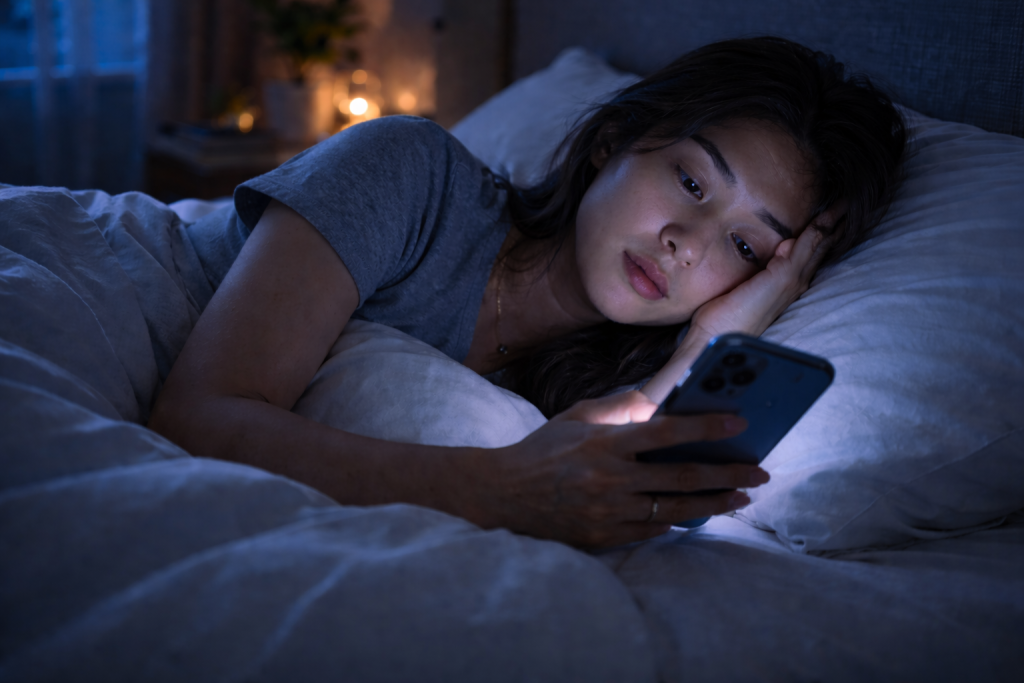
For many people, it’s instinctive:
👉 check the time
You might:
- reach for your phone
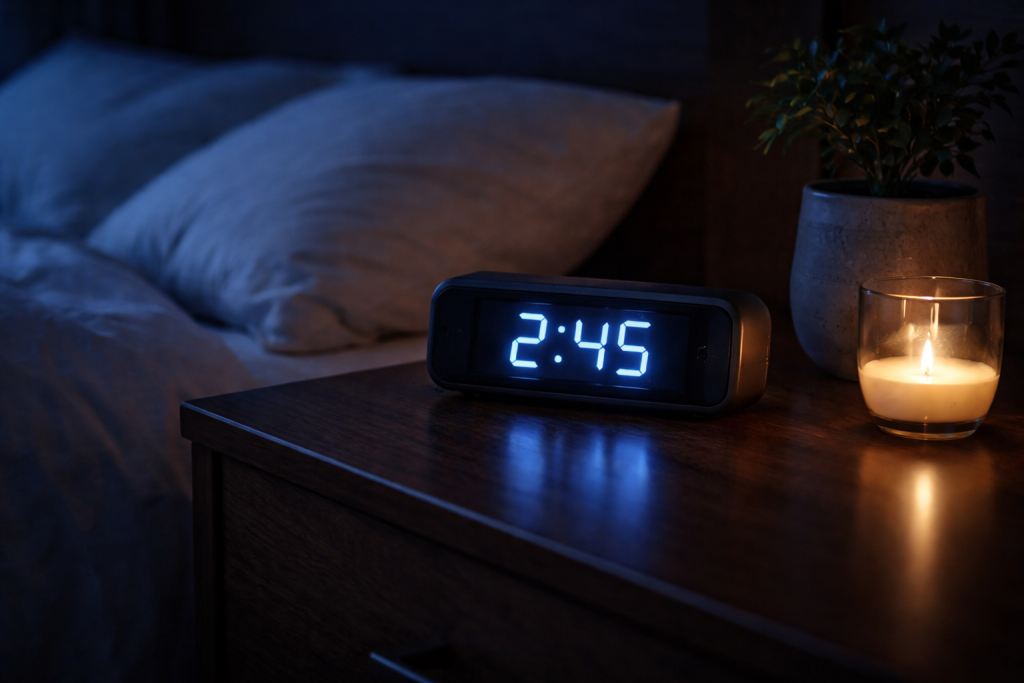
- look at the clock
- mentally calculate how much sleep you have left
It happens almost automatically.
But over time, this habit can actually make it harder to fall back asleep—and it’s not random.
There are specific reasons your brain does this.
1. Your Brain Is Seeking Control
When you wake up unexpectedly, your brain tries to make sense of the situation.
Checking the time gives you:
- context
- a sense of control
- a quick “status update”
This is especially common if you already wake up in the middle of the night, where your brain is trying to understand what’s happening.
2. Anxiety About Sleep
If you’re even slightly concerned about your sleep, your brain may immediately think:
- “How much sleep do I have left?”
- “Am I going to be tired tomorrow?”
This can create a loop where:
👉 waking up → checking time → more stress → harder to sleep
This connects to why do I feel anxious at night and why you wake up and can’t stop thinking, where your mind becomes more active.
3. Your Brain Is Trained to Do It
Habits form quickly.
If you’ve checked the time repeatedly in the past, your brain learns:
👉 wake up = check time
Over time, this becomes automatic behavior—even if it’s not helpful.
4. Light Exposure Wakes You Up More
If you’re checking your phone, you’re exposing your eyes to light.
That light:
- signals your brain to wake up
- reduces melatonin
- makes it harder to fall back asleep
Even a quick glance can make a difference.
5. You’re Trying to “Optimize” Sleep
Some people check the time to:
- calculate sleep cycles
- estimate remaining sleep
- plan when to wake up
But this often backfires by:
- increasing mental activity
- creating pressure to fall asleep
6. Your Brain Is Already Alert
If you wake up during a lighter sleep stage, your brain may already be more active.
This makes it easier to:
- think
- analyze
- check the time
This overlaps with why do I wake up wide awake in the middle of the night and why do I wake up suddenly at night for no reason.
7. It Reinforces Wakefulness
The act of checking the time does more than inform you—it reinforces that you’re awake.
This can:
- shift your brain further out of sleep mode
- make it harder to relax
- extend how long you stay awake
Improving your overall sleep habits can make a big difference over time, especially if you focus on how to sleep better and build a consistent routine.
According to Sleep Foundation, behaviors that increase alertness during nighttime awakenings can make it harder to fall back asleep.
How to Stop Checking the Time at Night
If this habit is affecting your sleep, the goal isn’t perfection—it’s reduction.
Try:
- turning your clock away from view
- avoiding your phone during awakenings
- focusing on breathing instead of thinking
- reminding yourself that you don’t need to know the time
Over time, your brain will unlearn the habit.
Final Thoughts
Waking up and checking the time might feel harmless—but it can make nighttime awakenings more disruptive than they need to be.
The key is breaking the cycle.
By reducing stimulation and allowing your body to settle naturally, you can fall back asleep more easily and sleep more consistently.
Related Articles
- Why Do I Wake Up in the Middle of the Night? 10 Possible Causes
- Why Do I Wake Up Wide Awake in the Middle of the Night? 9 Possible Causes
- Why Do I Wake Up Suddenly at Night for No Reason? 9 Possible Causes
- Why You Wake Up and Can’t Stop Thinking (And How to Calm Your Mind)
- Why Do I Feel Anxious at Night? 9 Common Causes and How to Calm Your Mind
FAQ
Why do I automatically check the time when I wake up?
It becomes a learned habit. Your brain associates waking up with checking the time, especially if you’ve done it repeatedly.
Is checking the time at night bad for sleep?
It can be. It increases alertness and can make it harder to fall back asleep, especially if it triggers stress or thinking.
Should I avoid looking at the clock at night?
Yes, if possible. Reducing stimulation and avoiding light exposure can help you fall back asleep more easily.