
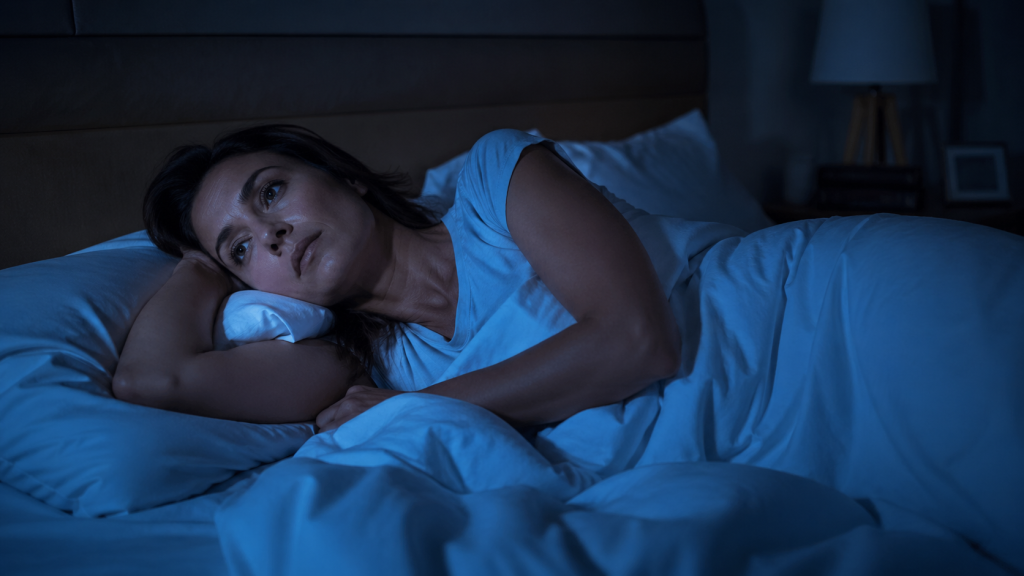
If you can’t relax your body at night, it can feel like you’re stuck in a frustrating loop.
You’re tired.
You want to sleep.
But your body just won’t let go.
You might notice:
- tension that won’t fully release
- difficulty getting comfortable
- a constant need to adjust your position
- a feeling like your body is “on” instead of resting
Even without pain or anxiety, this can make falling asleep—or staying asleep—much harder.
In most cases, this comes down to how your nervous system, muscles, and sleep environment are working together.
Let’s break down what might be causing it.
1. Your Nervous System Is Still Activated
If your body hasn’t fully shifted into a relaxed state, your muscles may stay slightly engaged.
This can happen if you:
- go to bed stressed
- use screens late at night
- don’t have a wind-down routine
This connects to why do I feel anxious at night, where your system has trouble powering down.
2. Muscle Tension Carrying Into Sleep
If you hold tension throughout the day, it can carry into the night.
This may feel like:
- tightness
- stiffness
- inability to fully relax
This overlaps with 7 reasons you wake up feeling tight in your body at night, where muscle tension plays a key role.

3. Poor Sleep Setup
If your mattress or pillow isn’t supporting your body properly, your muscles may stay engaged to compensate.
This can cause:
- discomfort
- pressure points
- subtle tension that prevents relaxation
Improving your setup can help—see best sleeping position for better sleep for guidance.
4. Mental Overactivity
Even if your body feels physically tired, your mind can prevent full relaxation.
This may show up as:
- background tension
- difficulty settling
- inability to fully “switch off”
This connects to why you wake up and can’t stop thinking, where mental activity affects physical relaxation.
5. Stress Hormones (Cortisol)
If your body has elevated stress levels, it can make it harder to relax physically.
This can lead to:
- muscle tension
- alertness
- difficulty winding down
6. Temperature or Environment Issues
If your environment isn’t comfortable, your body may stay slightly tense.
This includes:
- being too hot or too cold
- noise disruptions
- light exposure
Even small discomforts can prevent full relaxation.
7. Interrupted or Fragmented Sleep
If your sleep is frequently disrupted, your body may never fully settle into deeper rest.
This can create:
- ongoing tension
- difficulty relaxing
- frequent awakenings
This connects to why do I wake up multiple times at night, where sleep continuity is affected.
How to Help Your Body Relax at Night
If this is happening often, focus on helping your body fully transition into a relaxed state before sleep.
Try:
- building a consistent wind-down routine
- reducing screen time before bed
- improving mattress and pillow support
- keeping your bedroom at a comfortable temperature
- practicing relaxation techniques like deep breathing
According to Sleep Foundation, creating consistent pre-sleep habits and optimizing your environment can significantly improve your ability to relax and fall asleep.

Final Thoughts
If you can’t relax your body at night, it’s usually a sign that something is keeping your system slightly activated—whether it’s stress, environment, or physical tension.
The good news is that small adjustments can make a big difference.
Over time, helping your body fully unwind can lead to deeper, more consistent sleep.
Related Articles
- Why Do I Feel Anxious at Night? 9 Common Causes and How to Calm Your Mind
- Why Do I Wake Up Multiple Times at Night?
- Why You Wake Up and Can’t Stop Thinking (And How to Calm Your Mind)
- Best Sleeping Position for Better Sleep (Back, Side, or Stomach?)
- How to Sleep Better: 30 Science-Backed Tips That Actually Work Tonight
FAQ
Why can’t I relax my body at night?
This is often caused by stress, muscle tension, or an overstimulated nervous system.
Is this the same as anxiety?
Not always. You can feel physically tense even without obvious anxiety.
How can I relax my body before bed?
Simple techniques like stretching, deep breathing, and reducing stimulation can help your body unwind.